
Case Study
From Fragmented Workflows to Full Visibility: Transforming Resource Management at Philfords Design Engineering
How we transformed resource management from fragmented spreadsheets to real-time operational visibility.
Problem Before
Philfords Design Engineering managed its plant, equipment, and personnel both internal staff and external contractors through a combination of spreadsheets, phone calls, and email communication. This fragmented approach created significant operational inefficiencies.
Information was often outdated or inconsistent, scheduling conflicts were common, and coordination required excessive manual effort. The lack of a centralised system made it difficult to track resource availability, resulting in delays, miscommunication, and limited ability to plan beyond the short term.
Cost of the Problem
These inefficiencies translated into an estimated annual cost of £80,000–£110,000. This included lost productivity due to manual coordination, delays in project delivery, duplicated scheduling efforts, and underutilisation of both personnel and equipment. Additional indirect costs stemmed from administrative overhead and reduced operational agility.
The Solution
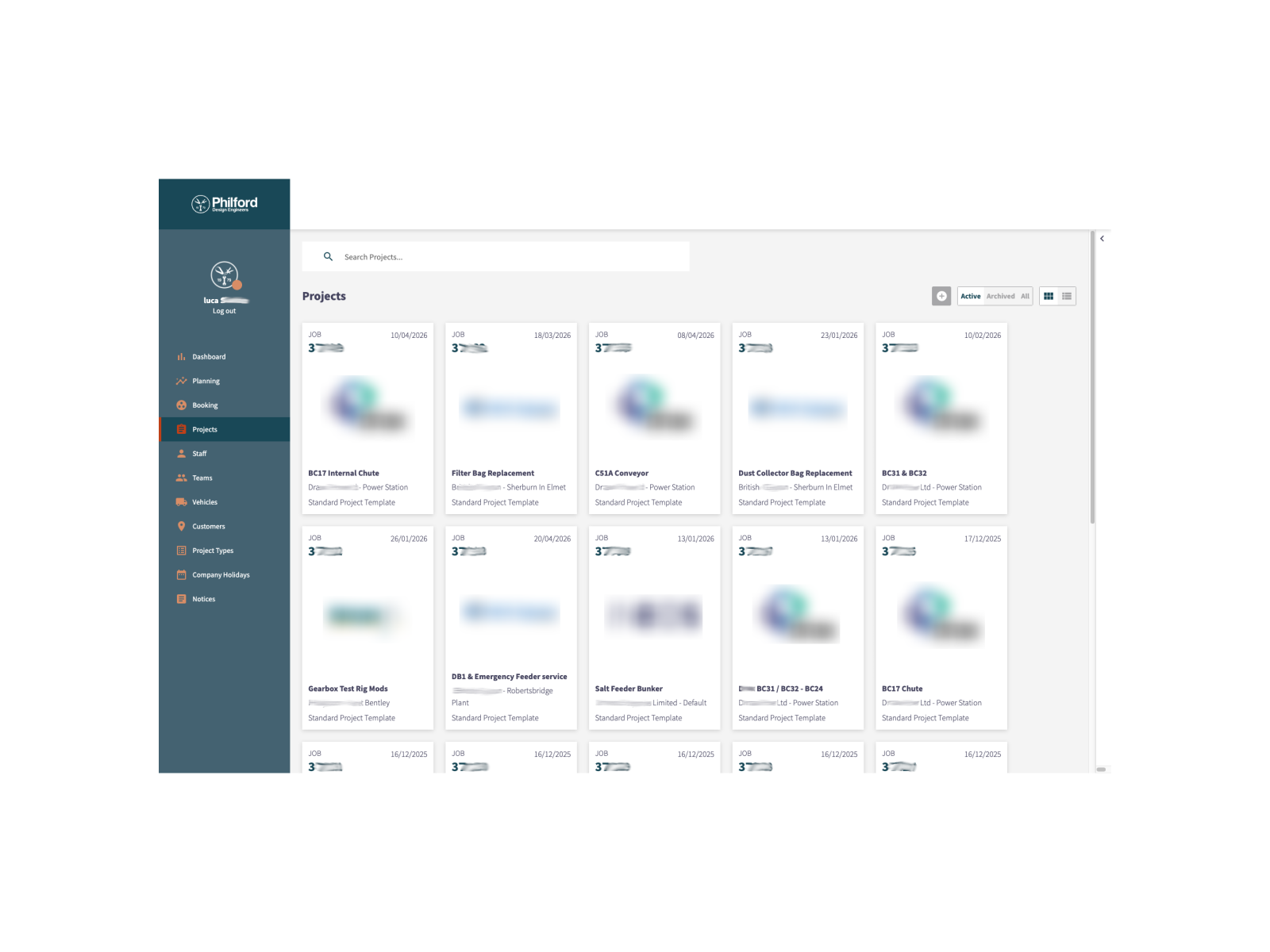
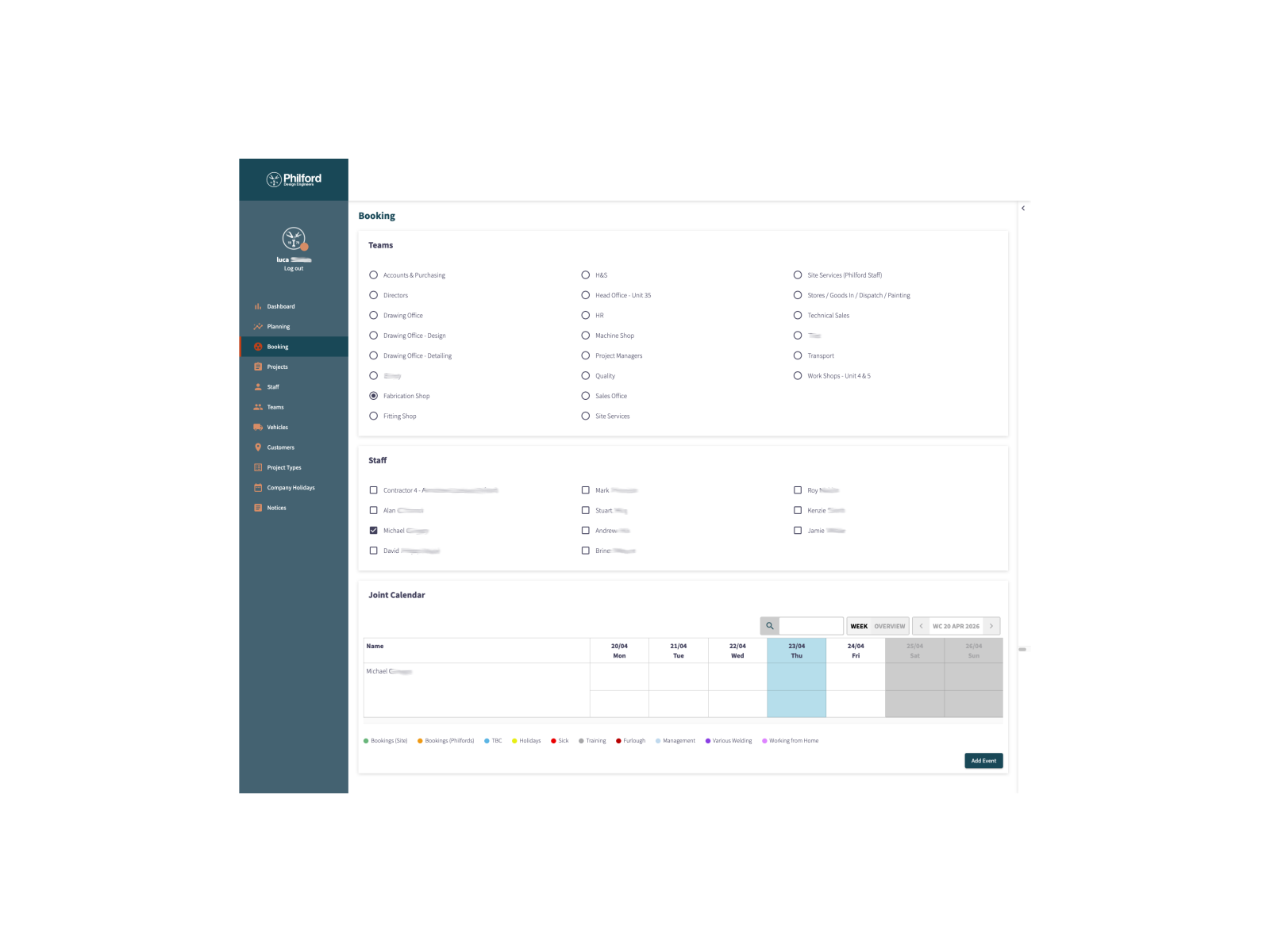
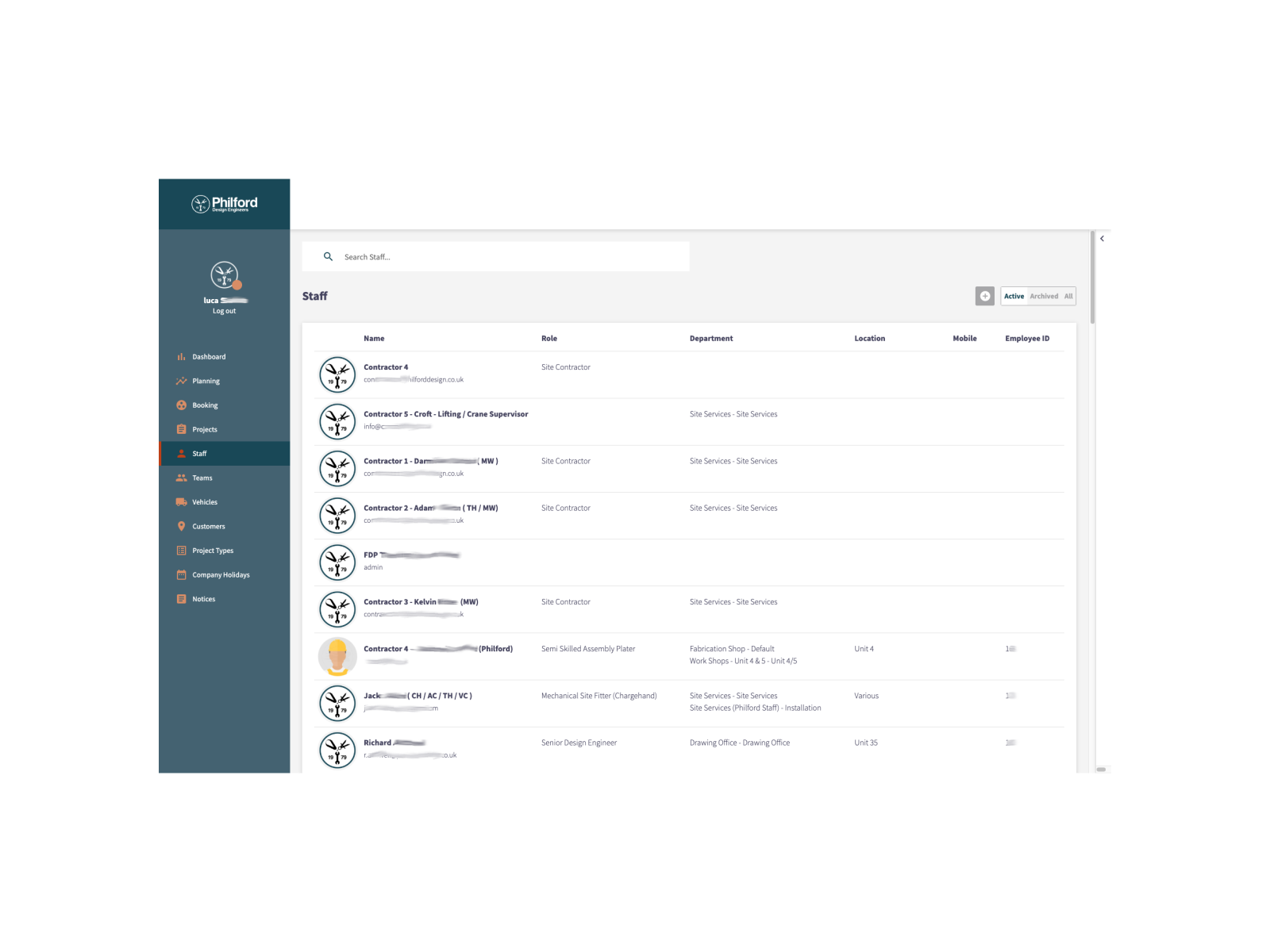
A bespoke web application was developed to centralise and streamline the management of all operational resources. The platform provides real-time visibility of plant, equipment, and personnel, enabling efficient allocation and long-term planning.
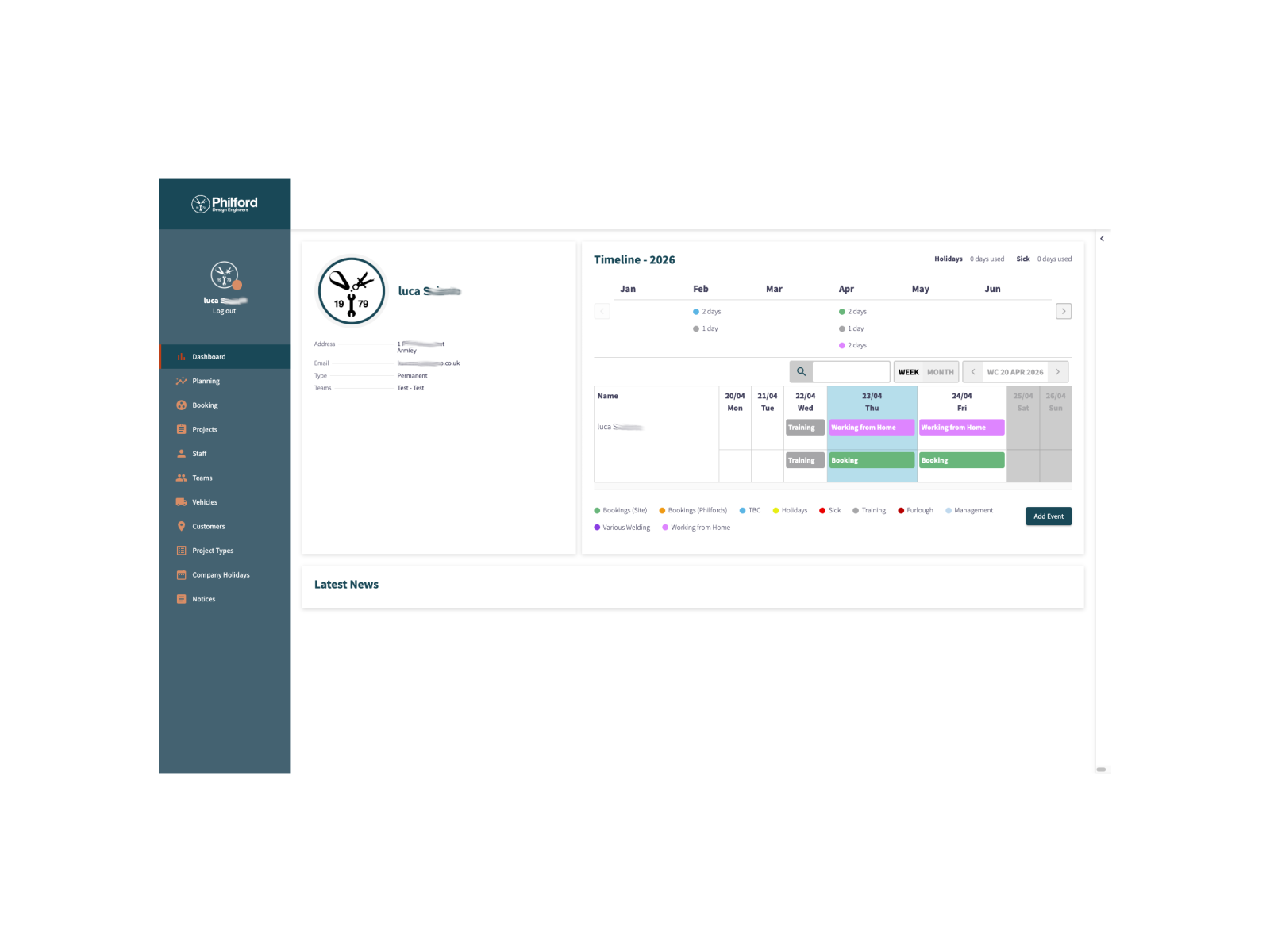
Employees and contractors can access their schedules, log holidays, record training, and manage time allocations independently. By replacing disconnected communication channels with a unified system, the solution significantly improved coordination and data accuracy.
Measurable Outcome
- 65% reduction in administrative coordination time
- 70% decrease in scheduling conflicts
- Ability to plan operations up to 24 months in advance with high confidence
- Resource visibility improved to near real-time accuracy
- Employee self-service reduced internal communication volume by approximately 50%
Overall, operational inefficiencies were reduced, generating an estimated annual saving of £55,000–£75,000.
Get Started